
Worn at Wembley: How Wembley Made Menswear Matter

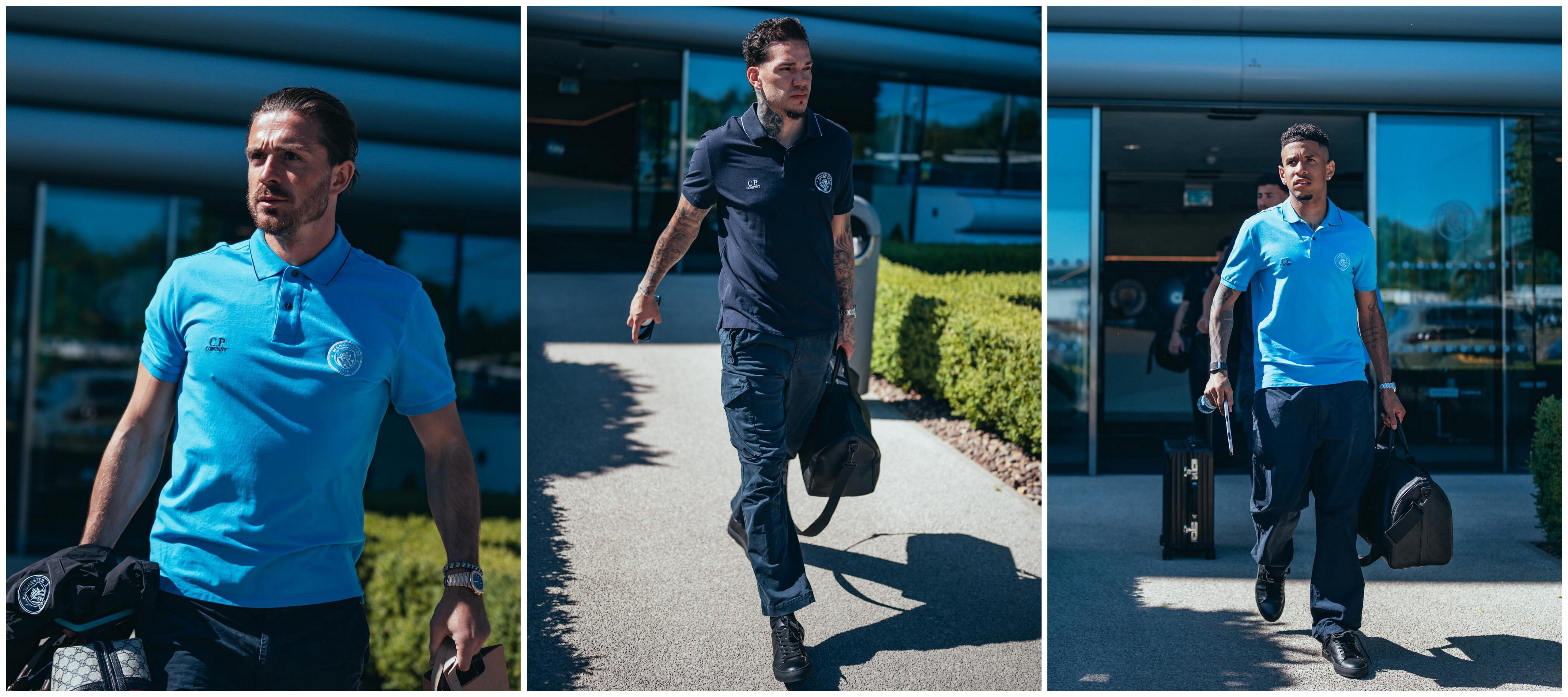
This Saturday, Manchester City will arrive at Wembley wearing C.P. Company. The partnership is contemporary: official teamwear, sponsor imagery, social media circulation, global reach. But it also belongs to a much older structure. Long before football clubs spoke the language of collabs, content and brand alignment, Wembley was already turning clothes into evidence.
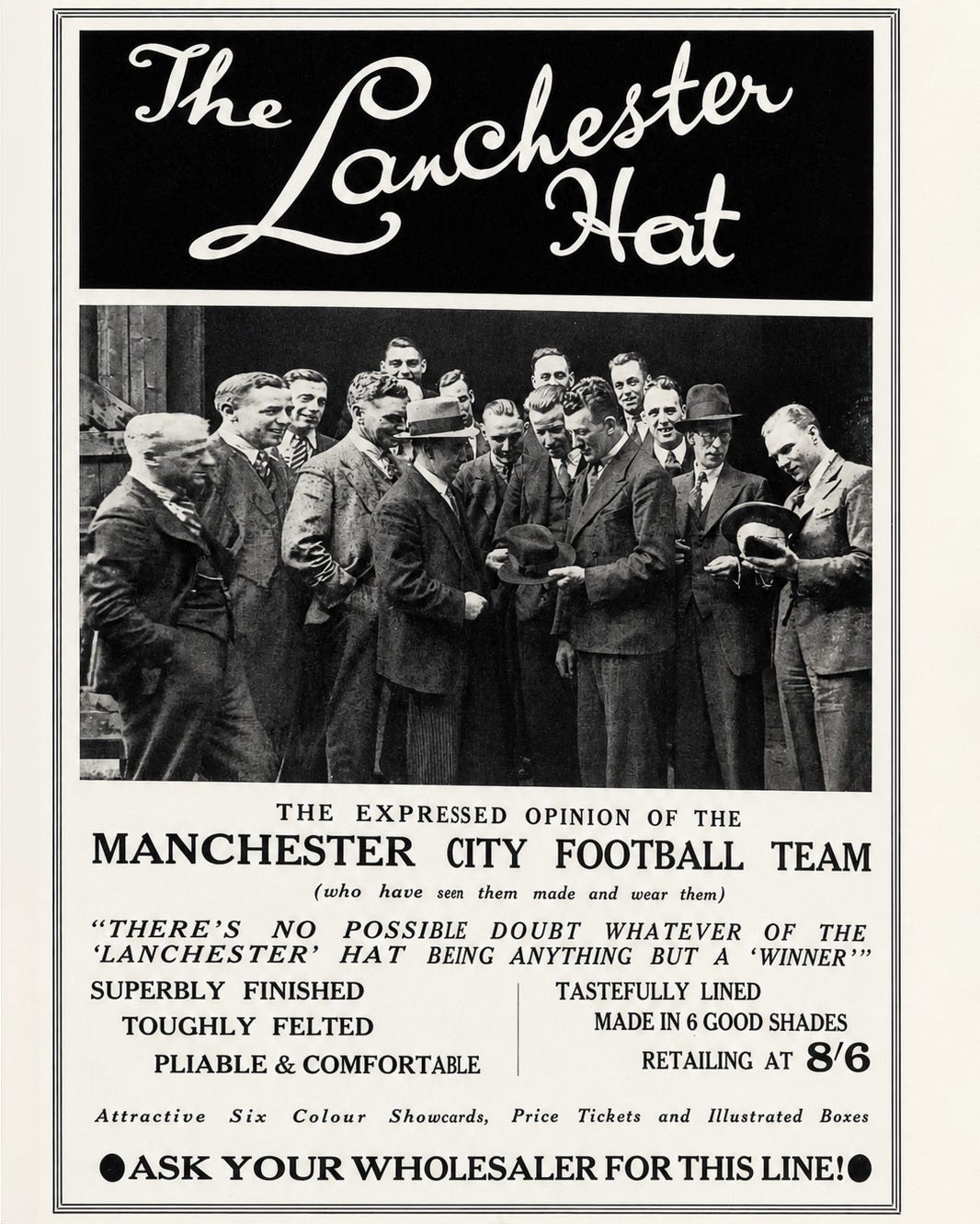
The evidence is in the adverts. Across the 1930s and 1950s, Manchester City’s appearances at Wembley were used to sell hats, scarves, ties, raincoats, tracksuits, jerseys and blazers. These were not marginal details around the match. They show how the FA Cup Final attached ordinary men’s clothing to public attention, civic pride and emotional memory.
The FA Cup Final is watched, but it is also worn. It gathers the emotions of a season and focuses them into one day, one place and one shared moment. Clothing absorbs that charge. It carries the hope before kick-off, the anxiety during the match and the memory afterwards. C.P. Company dressing Manchester City for Wembley is not a break with football history. It is the latest version of an older Wembley logic: when clothing appears at the FA Cup Final, it becomes more than clothing.
In 1934, that logic was local. Manchester City’s FA Cup victory belonged not only to Wembley, but to Manchester’s supporters and menswear manufacturers. The match happened in London, but its commercial afterlife happened back home. Lanchester Hats used City’s Cup success to sell headwear.
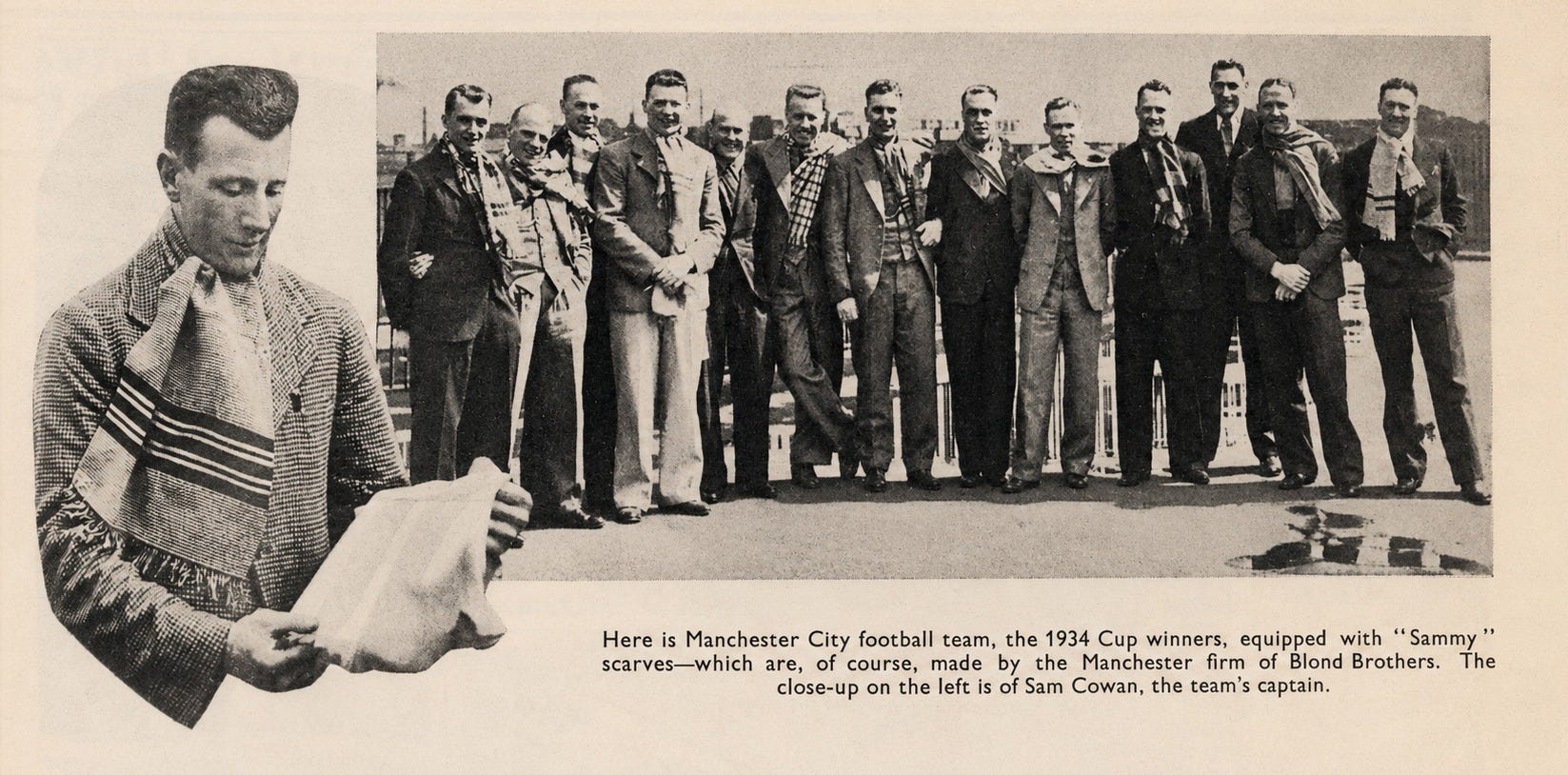
Sammy Scarves turned the team’s collective image into warmth and affiliation.
Fred W. Middleton staged the choosing of “Favourite” ties as retail theatre, with the players gathered inside a Manchester outfitter.
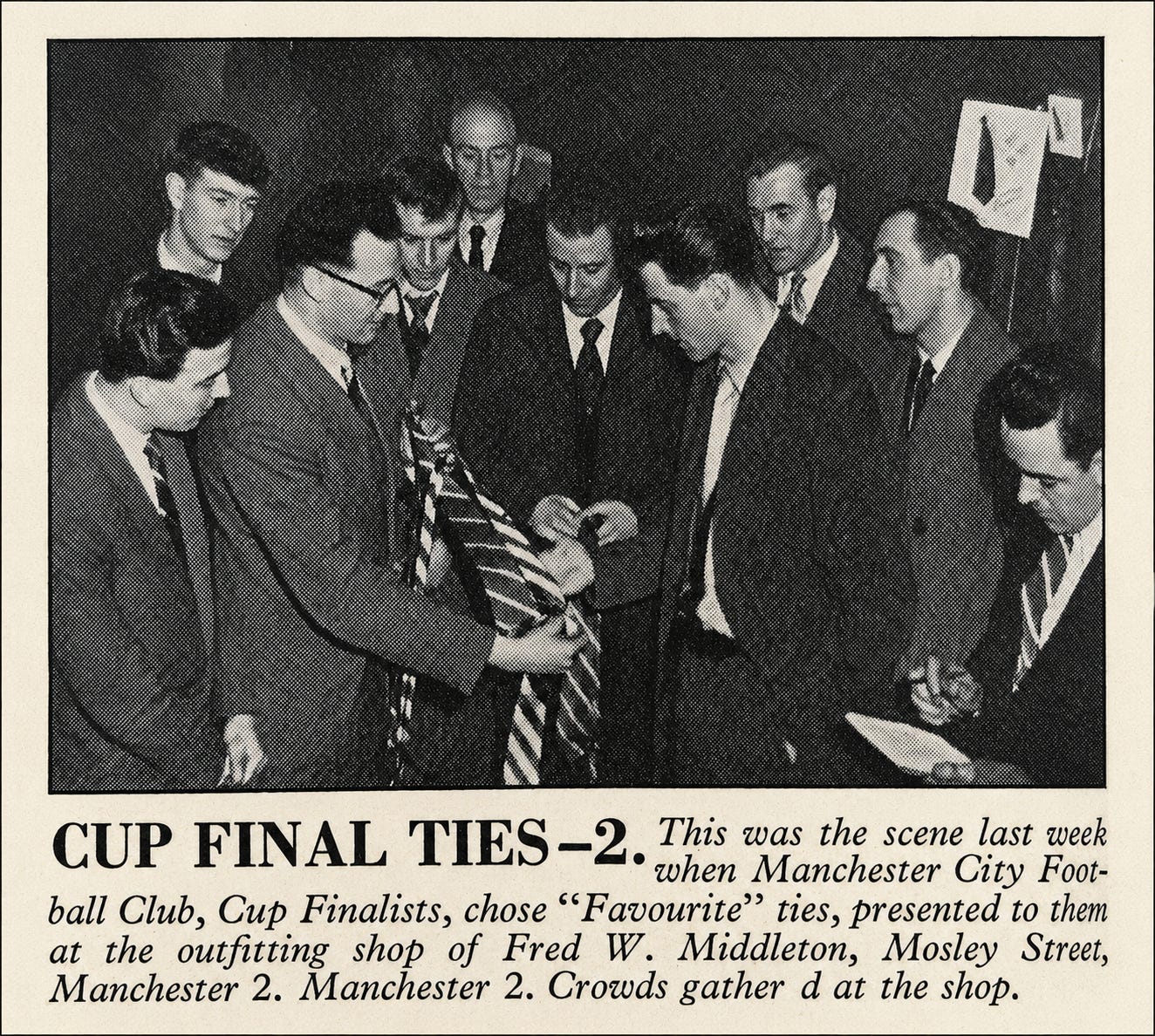
These adverts placed Cup Final success inside the everyday spaces of Manchester retail: the shop, the manufacturer, the clothes chosen and worn around the event.
This matters because it extends well beyond the football shirt. It shows the male wardrobe being positioned around football. It demonstrates that football was already dressing the male body beyond the pitch, turning ordinary garments into carriers of pride and also attachment. The 1934 images show local feeling turned into product, and product given emotional force by victory. They were not selling fashion in the abstract; they were selling proximity to an event that had already become part of Manchester’s civic memory.
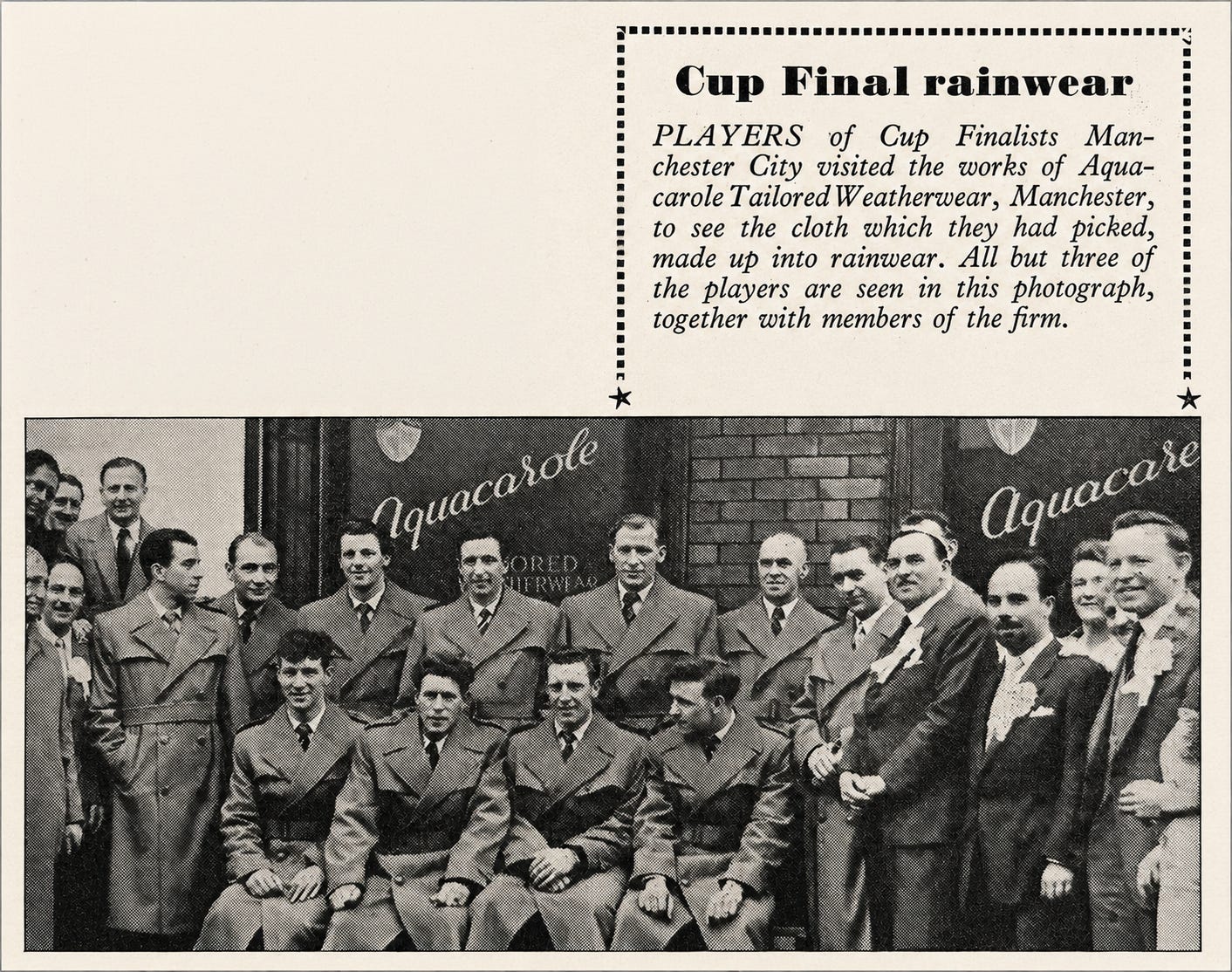
By the 1950s, the same structure was operating at national scale. Wembley was a national stage, mediated through radio, newsreels and television. The final was no longer confined to those inside the stadium. It could be seen, heard and witnessed live across the country. A feature in The Outfitter shows the older local mechanism being preserved inside this newer media world: Manchester City players visiting Aquacarole’s Manchester works to see their chosen cloth made up into rainwear.
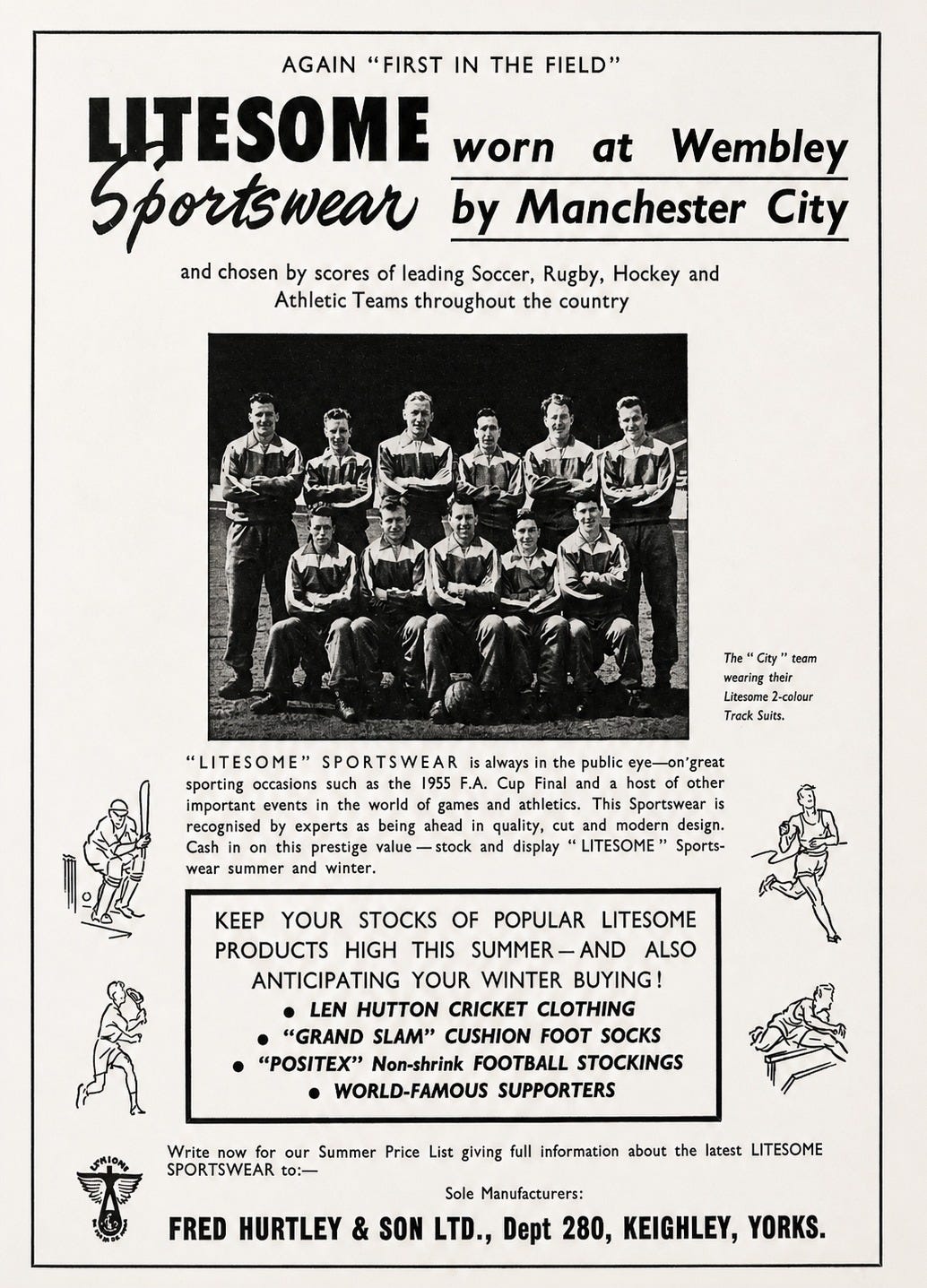
For Litesome, “worn at Wembley” was enough. Manchester City lost the 1955 FA Cup Final, but the defeat did not weaken the advert. The tracksuit did not need victory because Wembley was the claim. To be worn there was to be validated there.
Umbro made that logic even clearer. The 1956 image of Manchester City’s new Cup Final jersey is more than a photo of a football shirt. It presents design work in progress: adjustment, fitting and preparation. This was not equipment simply handed over to a team, but a garment being readied for visibility at Wembley.
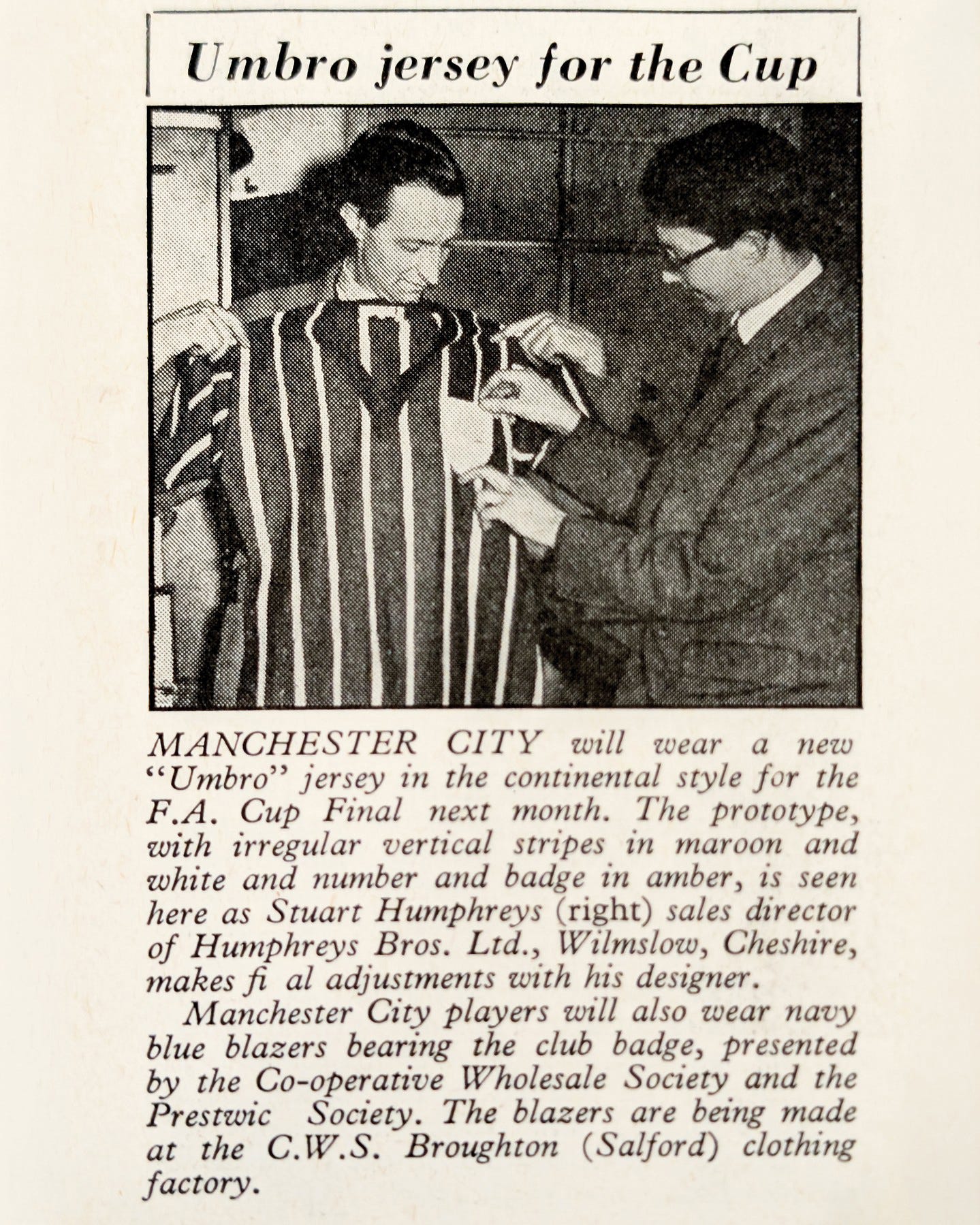
The blazers supplied by the Co-operative Wholesale Society underline the point. City were dressed not only for play, but for the public rituals around it: arrival, presentation and ceremony.
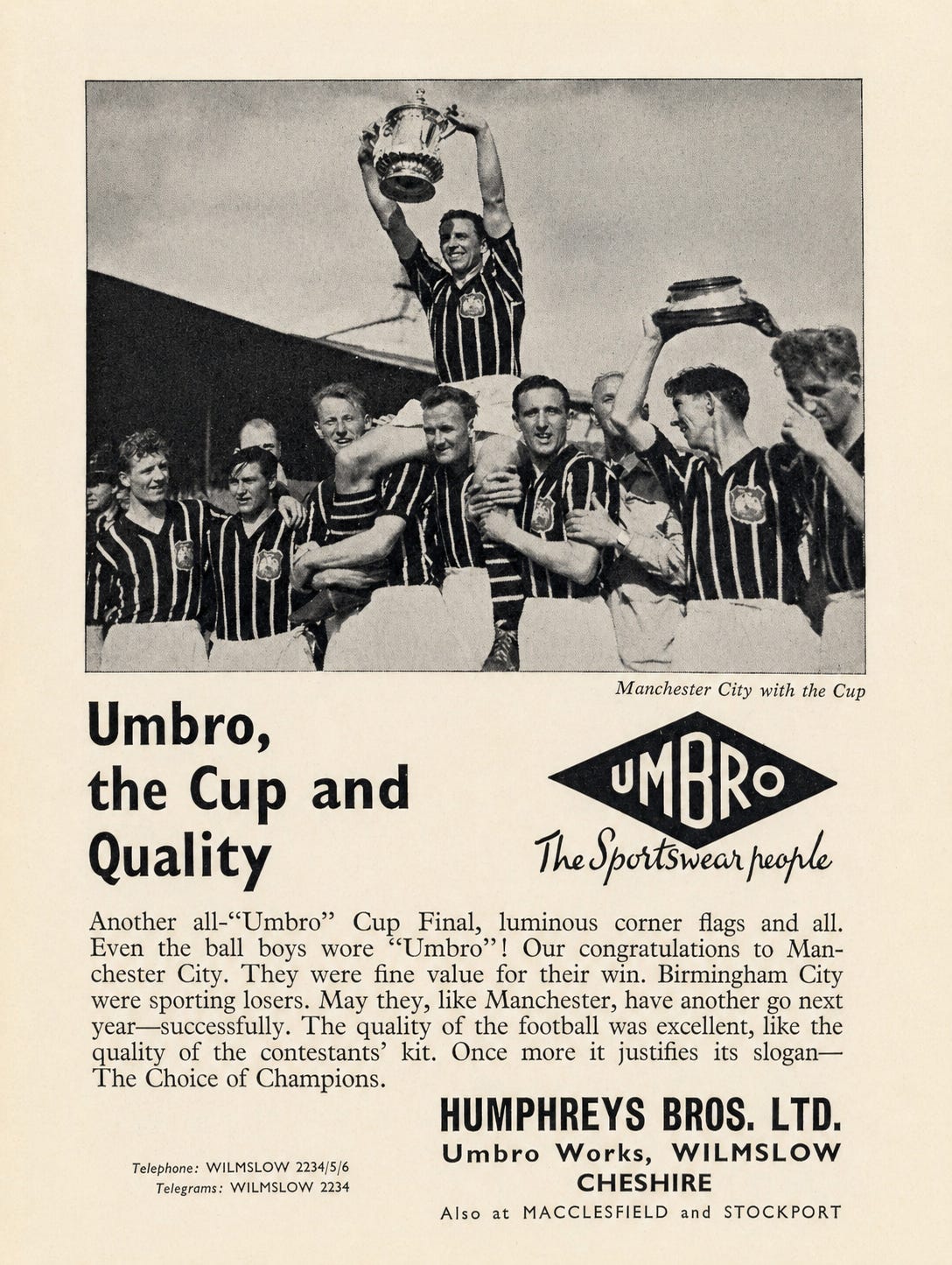
The post-victory Umbro advert makes this mechanism explicit. The Cup, the team, the shirt and the brand collapse into one claim: victory validates the garment. The same mechanism operates today, only the means of circulation have changed.
Today, Manchester City and C.P. Company operate on a global scale. Menswear at the FA Cup Final is no longer experienced only through attendance, television or newspaper coverage. It now circulates in fragments: arrival shots, travel images, sponsor edits, fan posts and social-media clips. Clothing does not wait for the whistle; it begins working the moment it appears on the players’ bodies.
In the 1930s, proof was local. In the 1950s, it became national. Today, it is global. The scale changes, but the structure remains: football concentrates attention, and menswear turns that attention into meaning.
Clothing matters at the FA Cup Final because so much of it starts as practical: the shirt bought at the start of the season, the scarf worn on cold winter terraces, the coat that keeps you dry on rain-soaked away days.
These ordinary decisions become a shared way of watching, dressing and belonging. Wembley changes their status. What was worn in routine is suddenly worn in front of 90,000 people, inside the stadium every fan wants to reach. The shirt is no longer just new, the scarf is no longer just warm, the coat is no longer just dry. They have become emotional objects, carrying the season at the moment it matters most.
That is what Manchester manufacturers saw in 1934, what Litesome and Umbro understood in the 1950s, and what C.P. Company enters into now. The FA Cup Final gives clothing something advertising alone cannot: the charge of having been there. The match decides the result, but Wembley changes the meaning of what is worn.
Win or lose, what is worn there comes back as evidence of belonging.
About the author
Andrew Groves is Professor of Menswear Systems and Director of the Westminster Menswear Archive at the University of Westminster. He writes weekly on menswear, archives, and systems, focusing on how authority and value are produced through clothing. andrewgroves.com
This newsletter examines how menswear operates as a system. Authority, credibility, and value are produced through use, regulation, and appearance.
Subscribe to receive one essay every Thursday.