
The God Jacket
Vollebak, sound, and the menswear of bodily control

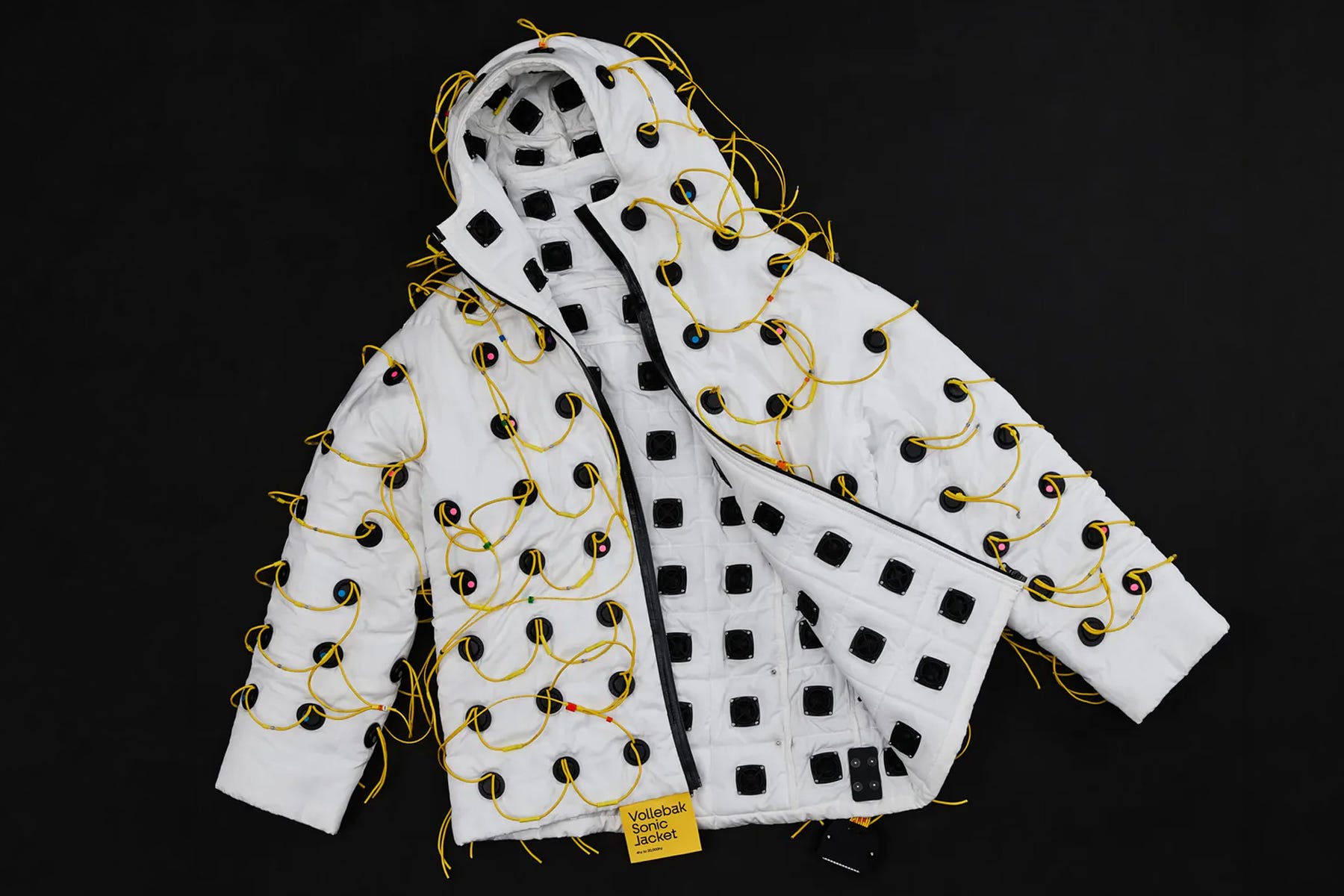
“Maybe you’ll orgasm. Maybe you’ll shit yourself. Maybe you’ll find God.”
Vollebak launched the Sonic Jacket last week with language that doesn’t read like normal menswear copy. It doesn’t promise warmth, waterproofing, durability or performance. Instead it promises bodily rupture: pleasure, loss of control and religious experience all compressed into a single garment.
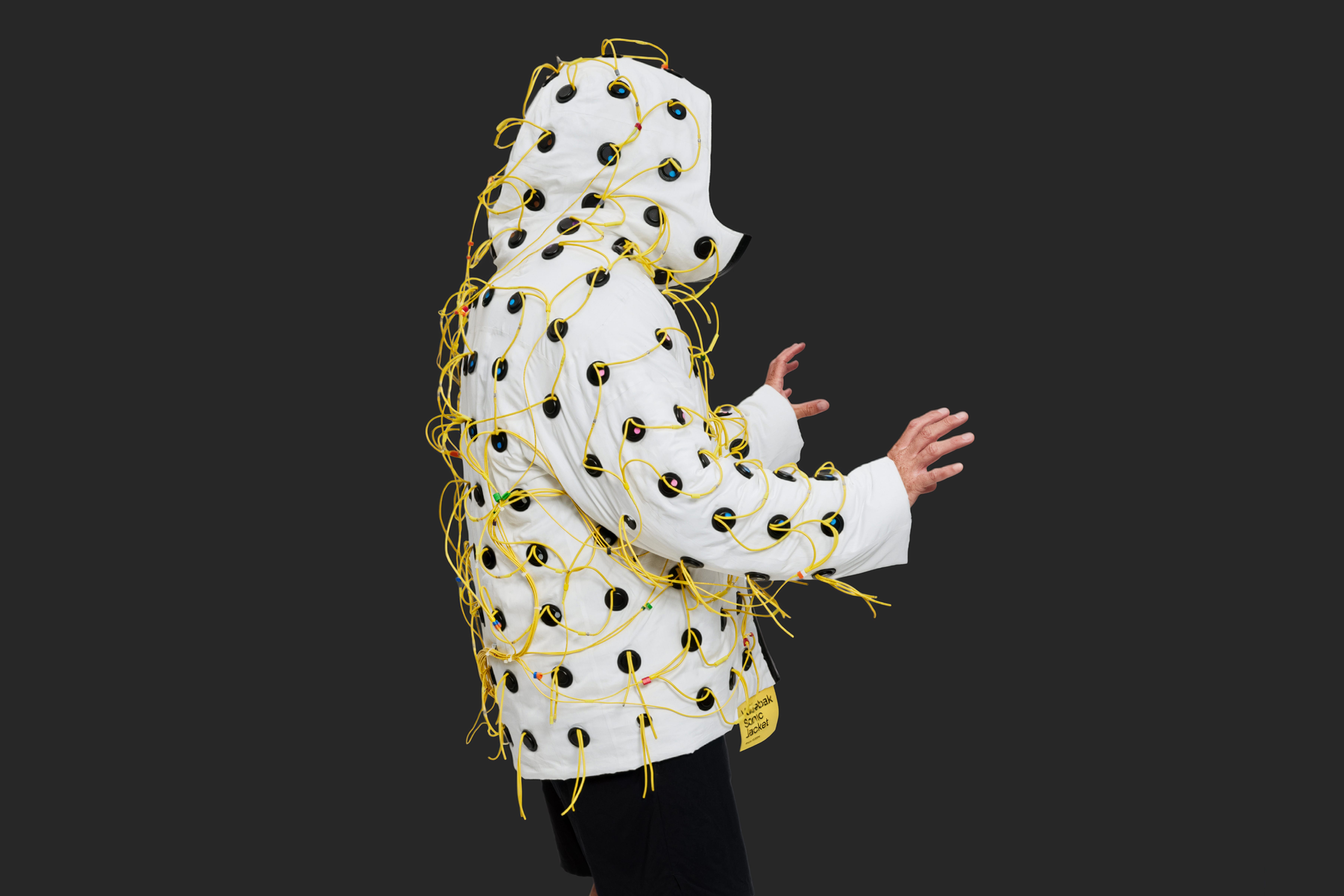
The jacket, described as “the world’s first sonic clothing”, contains 180 inward-facing speakers built into the body, arms and hood. Vollebak’s press release says it is “engineered to shift the wearer’s cognitive and physiological state through sound”. “You don’t listen to the Sonic Jacket. You feel it.”
This is not a discreet wearable disappearing beneath clothing. It is outerwear turned into an acoustic chamber. The body is no longer just dressed; it is tuned.
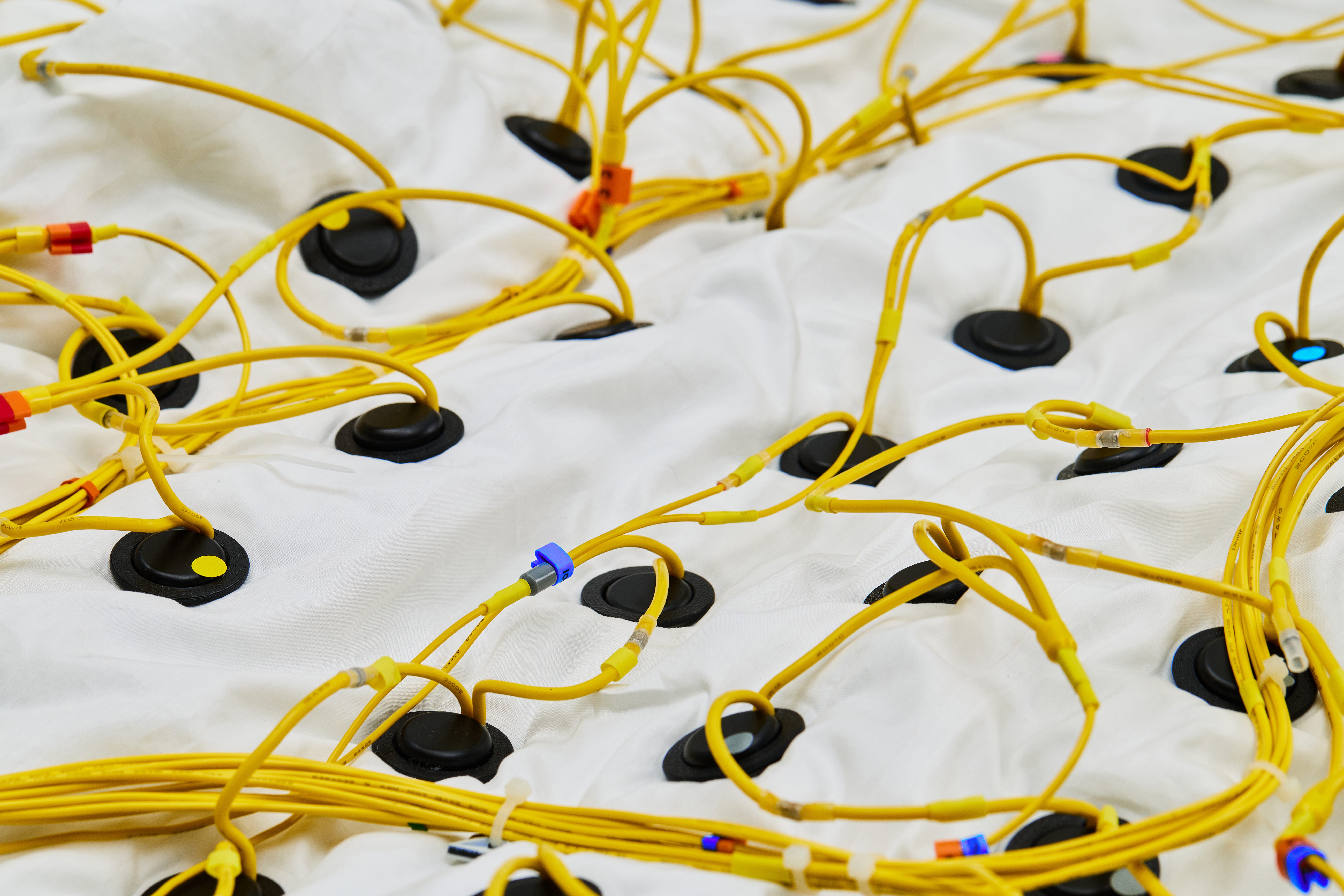
For most of its history, technical menswear has been organised around protection. It kept the body operational in conditions where exposure mattered, managing the relationship between the wearer and the outside world. The Sonic Jacket does something different. It does not manage the environment around the wearer; instead it makes the wearer’s body the environment to be managed.
Sound is no longer external, but worn on the body and directed inward. The jacket becomes a private architecture of vibration designed to alter the wearer’s physical condition. Vollebak’s claim is more explicit: the jacket is “engineered to alter consciousness through frequency”.
And once a garment acts on the body, the question is no longer only what it can do, but who controls what it does.
Menswear has always done more than express identity; it has shaped bodies for use. Tailoring regulates posture; uniforms organise hierarchy and readiness; workwear keeps labouring bodies operational. Across these contexts, clothing performs the same basic task: it stabilises the body inside systems that need it to behave predictably.
The Sonic Jacket drives that logic inside the body. The question is no longer what clothing makes you look like, but what state it puts you in, and who gets to decide.
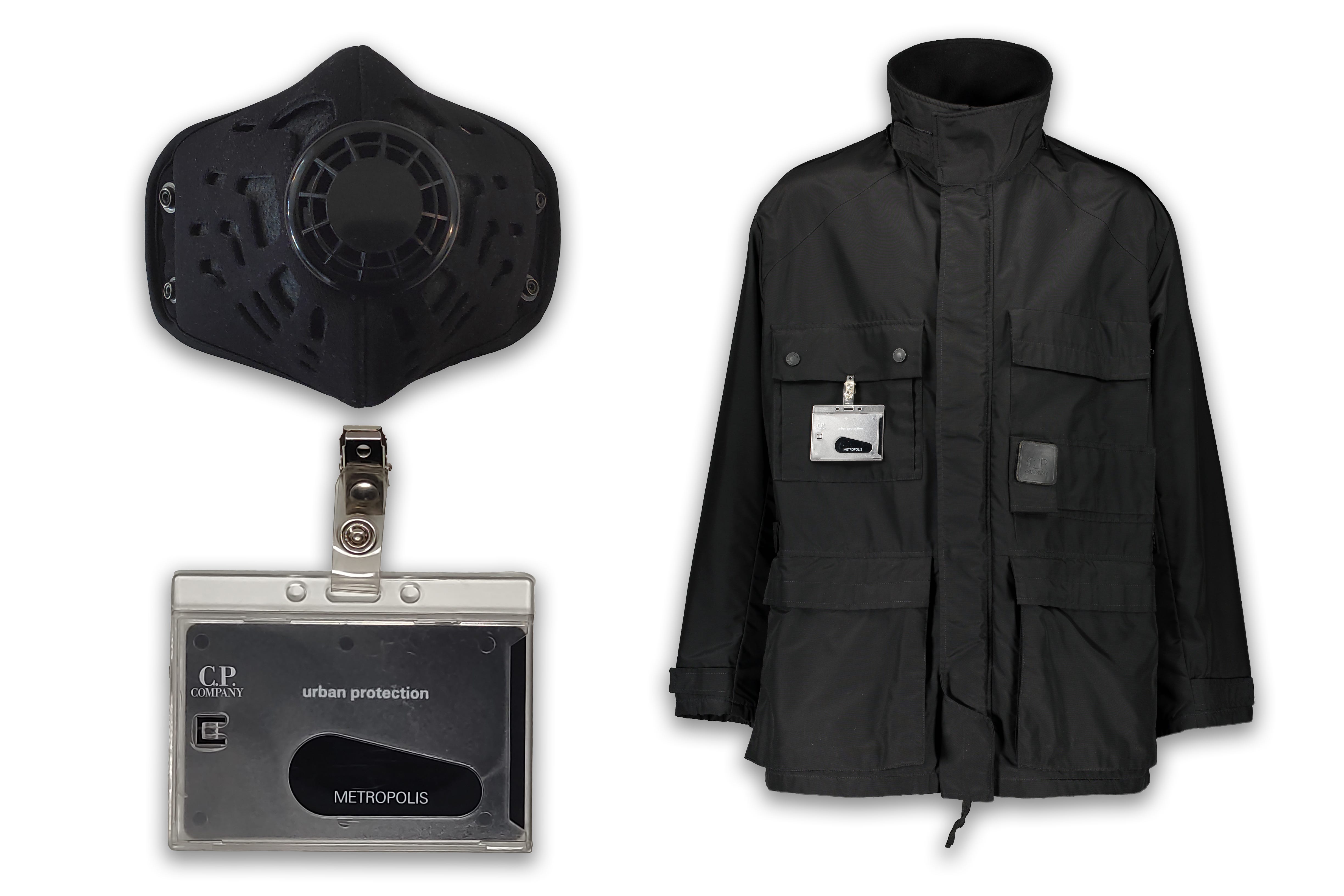
To understand that inward turn, it helps to start with technical menswear’s older promise: protection. In the late 1990s, Moreno Ferrari’s Urban Protection range for C.P. Company imagined clothing as a technological skin for an anxious city. Anti-smog masks, gas sensors, voice recorders, ear defenders, and alarms turned outerwear into a system for managing pollution, noise, isolation, panic and urban exhaustion.
But Ferrari’s garments still faced outward. Even when they dealt with anxiety, they located the threat in the city. The body was vulnerable, but the problem remained external to it.
Vollebak keeps the technical fantasy but reverses its direction. The Sonic Jacket does not shield the wearer from sound; it uses sound to act directly on the body. The garment is no longer protection from the world. It becomes an interface between technology and the nervous system.
The composer Alvin Lucier approached the body from the opposite direction. In Music for Solo Performer (1965), Lucier used electrodes attached to his head to translate brainwave activity into sound, activating percussion through the body’s own internal signals. The head apparatus does not control him from outside. It makes the body readable. Neural activity becomes output. The body becomes an instrument.
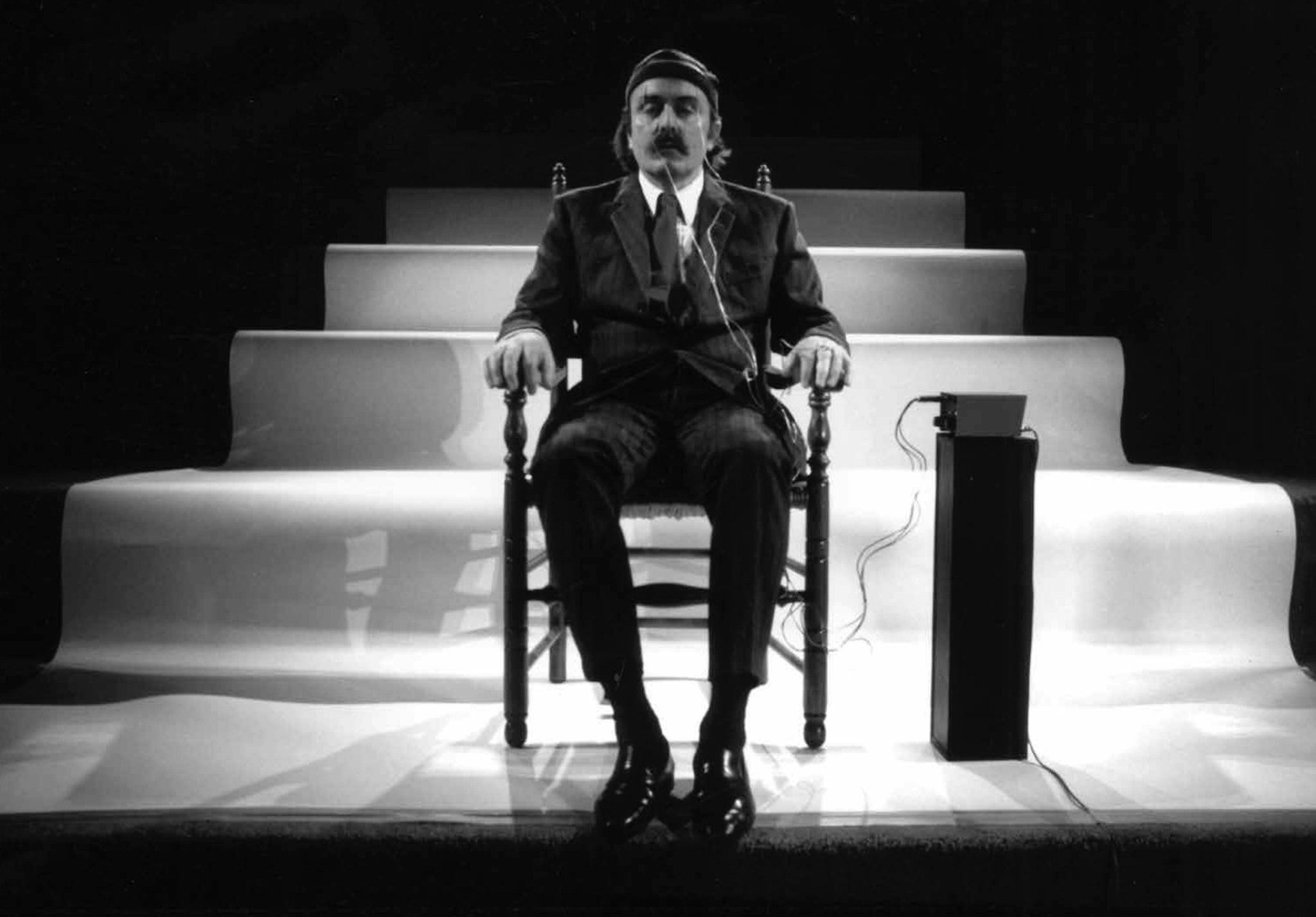
Vollebak reverses that relationship. The Sonic Jacket does not extract signal from the body; it sends signal into it. The wearer becomes material to be tuned, stimulated or altered.
Kate Bush’s Experiment IV takes this same logic and turns it into a weapon. Released in 1986, the song imagines a secret military project designed to create a sound that can kill from a distance. In the video, the head apparatus no longer makes the body audible. It makes the body controllable. Sound becomes institutional force.
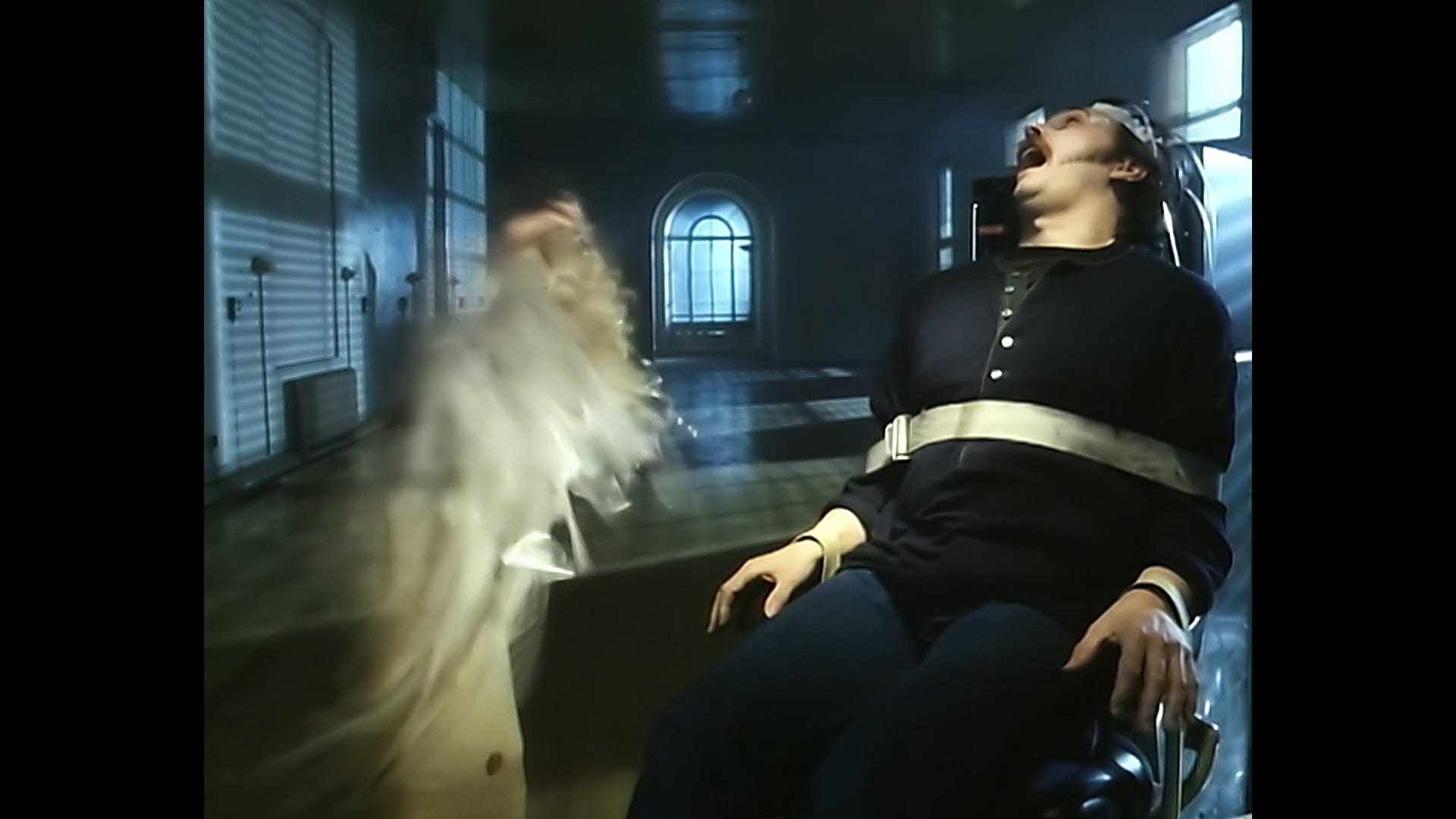
Vollebak is not making a weapon. But Experiment IV and the Sonic Jacket share a more disturbing premise: sound is not simply heard. It acts on the body.
That logic is not only fictional. LRAD systems have already formalised sound as crowd control, turning volume, direction and frequency into force. Sound does not need to kill to become coercive; it only needs to make the body obey.
The launch language for the Sonic Jacket moves between bodily excess, neuroscience and ritual. It presents the jacket as a secular ritual device: transcendence made portable, private and technically mediated. Vollebak’s own copy describes it as a “wearable resonance chamber” engineered to shift the wearer’s cognitive and physiological state through sound.
But that promise does not arrive from nowhere. We have already been trained to treat sleep, focus, recovery, mood and productivity as things to be measured and adjusted. The body is no longer simply lived in. It is monitored, tuned and improved.
The Sonic Jacket pushes that logic past optimisation and into surrender. It promises ecstasy, loss of control and revelation. It treats the body not as a clean data object, but as something that leaks, shakes, panics and believes.
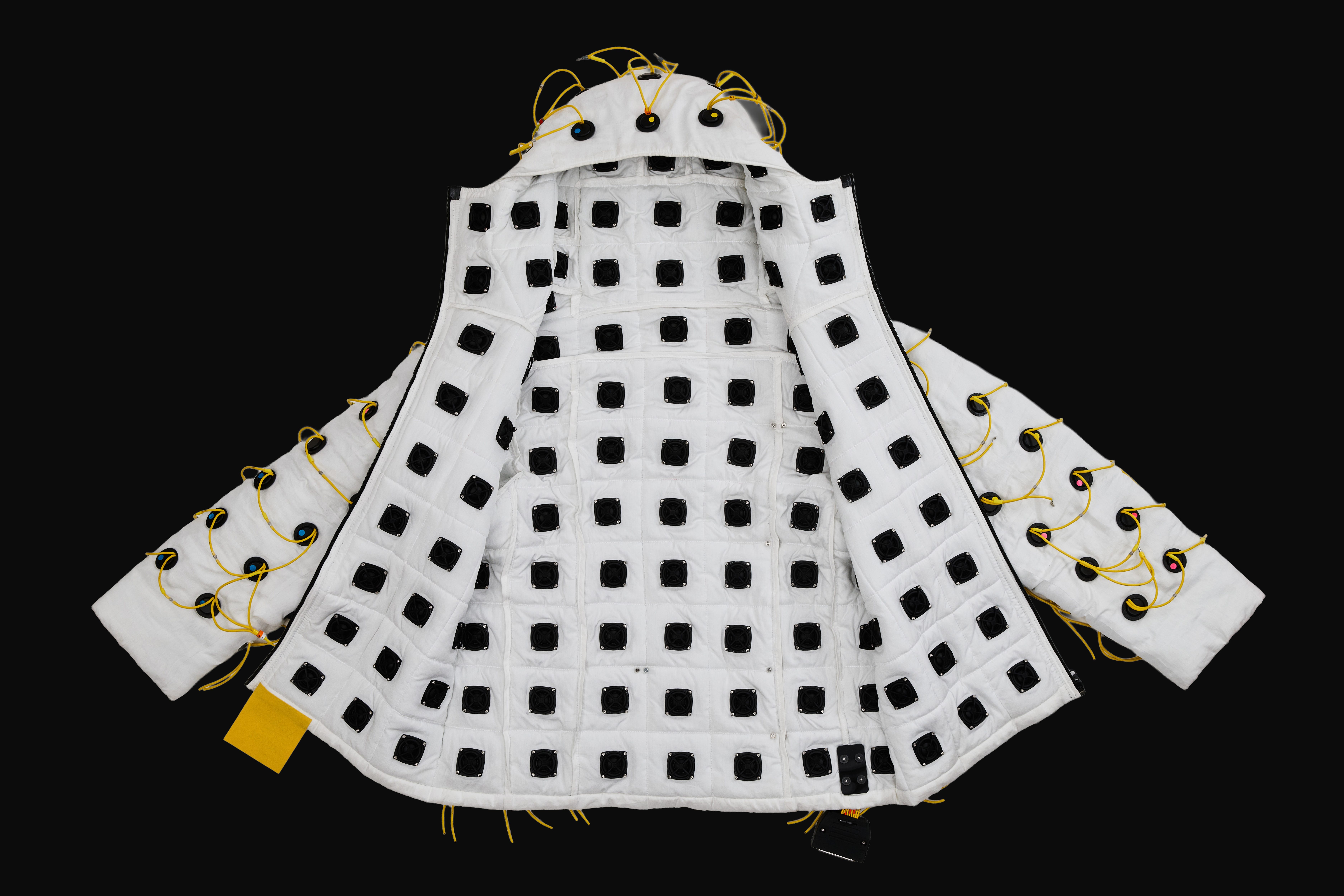
That is what makes Vollebak’s experiment revealing. The press release even maps frequencies onto desired effects: calm focus, creativity, meditation and flow. This is where technical menswear may be heading: not better protection, but clothing as state management. Garments designed to calm, stimulate, suppress, intensify or pacify.
As long as the wearer chooses the frequency, the jacket remains a tool of self-experimentation. But once bodily modulation becomes infrastructure, self-regulation becomes control. The body becomes adjustable from the outside.
In Experiment IV, the terror is sound that can kill. But the more useful weapon may be sound that does not kill at all. Sound that calms, focuses, arouses, pacifies or overwhelms. Sound that makes the body easier to direct.
Vollebak presents that power as personal experiment. But once clothing modulates bodily states, control stops being personal. It becomes structural.
The danger is not that clothing might help us find God. It is that it might give someone else the means to play God with us.
About the author
Andrew Groves is Professor of Menswear Systems and Director of the Westminster Menswear Archive at the University of Westminster. He writes weekly on menswear, archives, and systems, focusing on how authority and value are produced through clothing. andrewgroves.com
This newsletter examines how menswear operates as a system. Authority, credibility, and value are produced through use, regulation, and appearance.
Subscribe to receive one essay every Thursday.