
When Identity Becomes a Prison
Dress codes are never about clothes — they are about control.

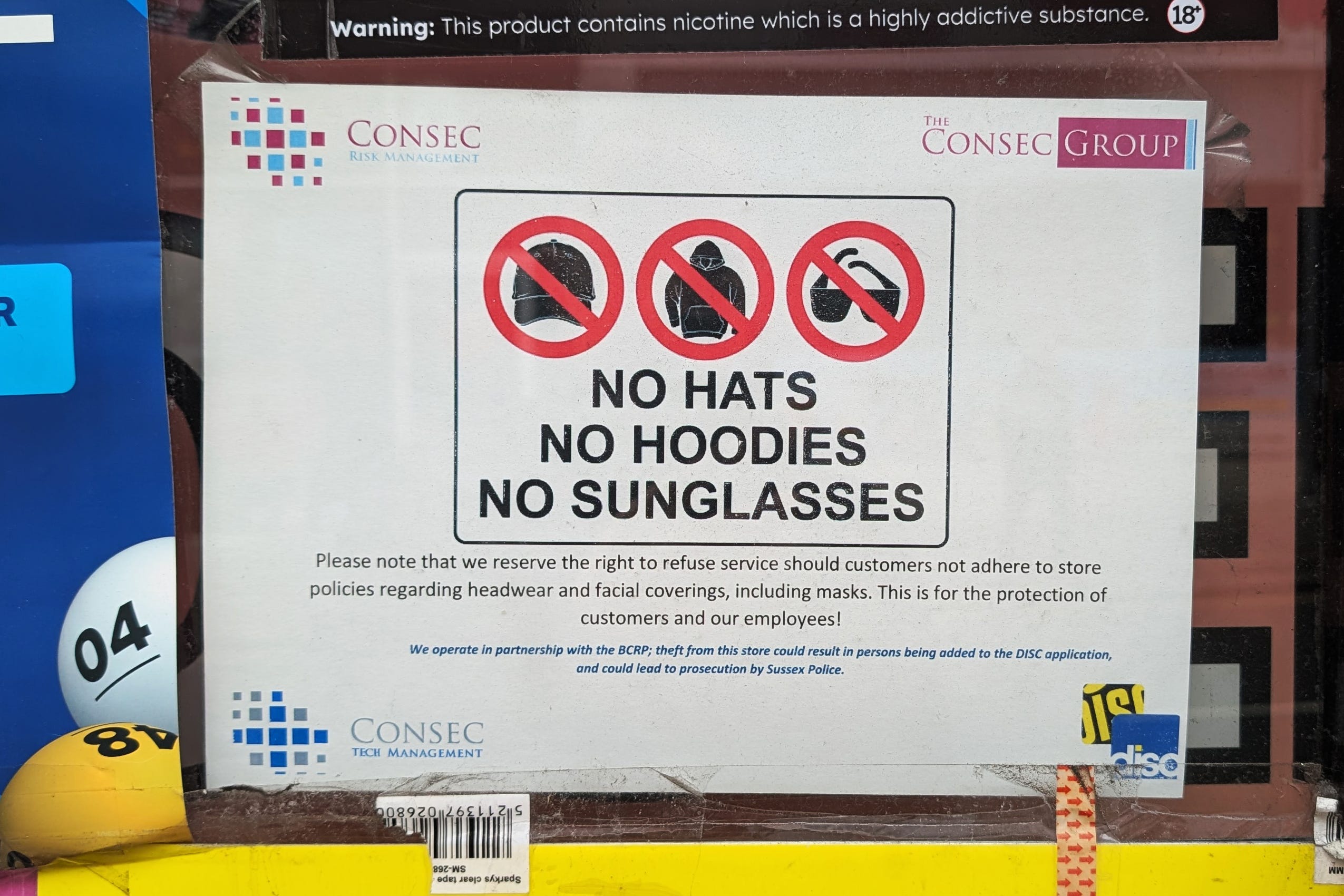
How we dress has, for some, opened doors. For others, it has seen those same doors slammed in their faces.
Yesterday, in the window of a shop, I saw a sign: No hats. No hoodies. No sunglasses. At first glance, it appears to be a rule about clothing. Except everyone knows it isn’t really about that. It’s about excluding people.
History shows that bodies and dress have always been unequally policed, with real consequences for those who fall outside accepted norms. Clothes are never just surface. They can draw suspicion or grant protection, expose someone to violence or help them slip away unnoticed.
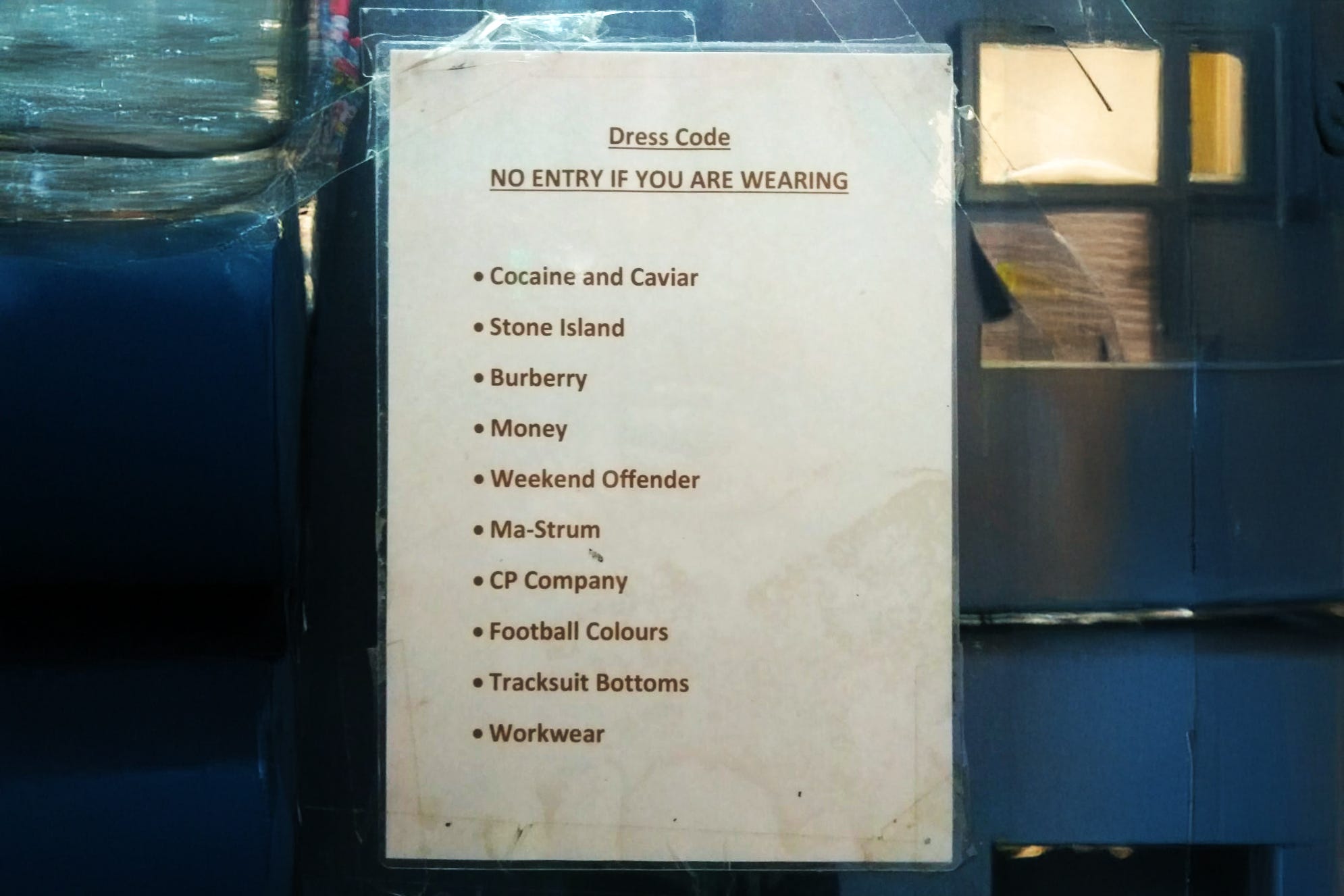
In the 1970s and 80s, under the “sus laws,” Black men in Britain were stopped and searched simply for what they wore and how they looked. What felt like confidence and belonging in one environment marked them as suspects in another. Until 1967, when homosexuality was decriminalised in Britain, gay men lived with the constant risk that what they wore might betray them. Even after decriminalisation changed the law, it did not end the abuse, police harassment, or violence directed at men whose clothes marked them out.
Bans on Stone Island and Burberry in pubs during the 1990s followed the same pattern. A badge or a check wasn’t dangerous, but it made some men instantly visible as the wrong kind of customer. Dress has always been the battleground where identity is managed, contested, and controlled.
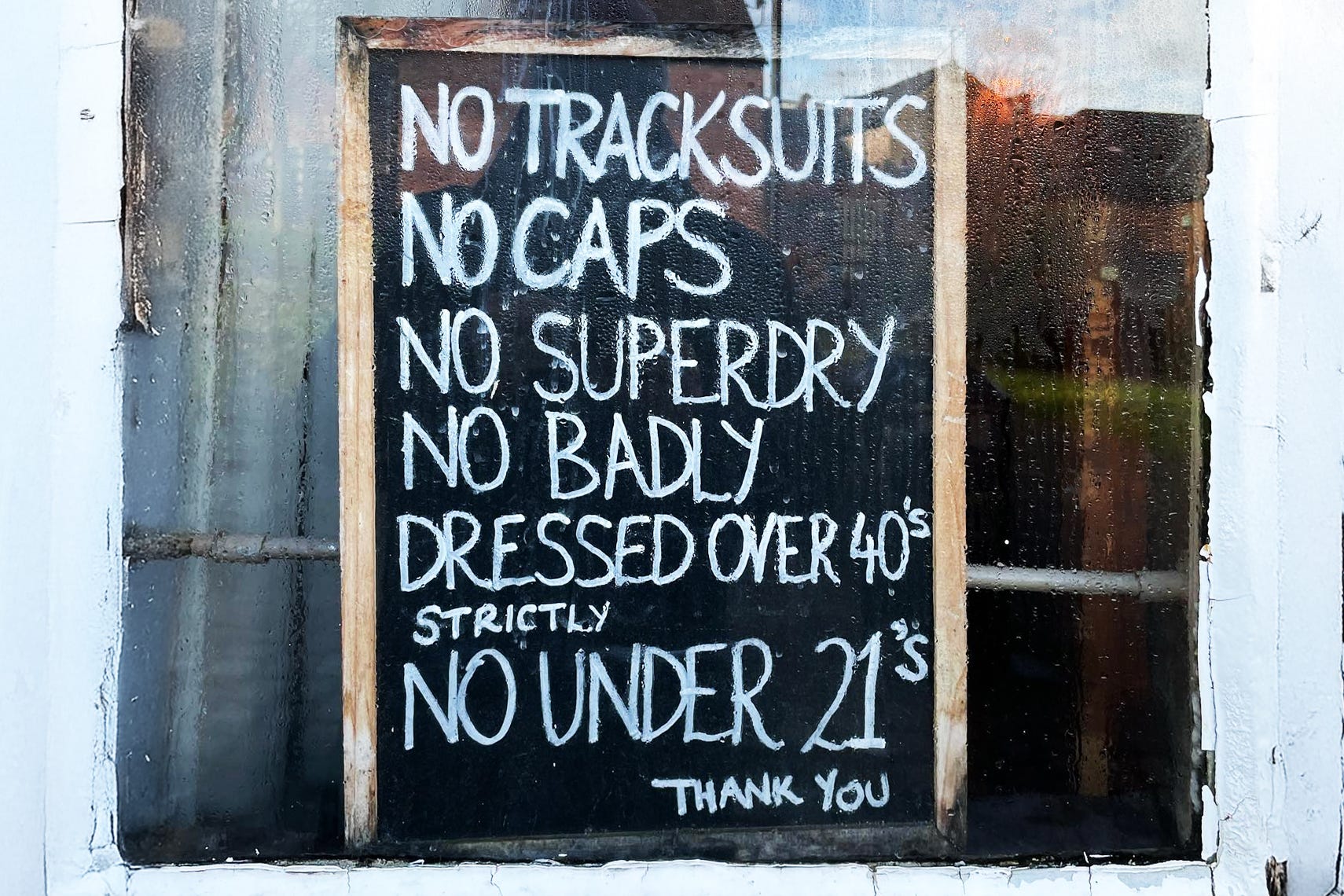
That ability to choose, to stand out or to blend in, to signal or to conceal, is what keeps identity fluid. And it is exactly what mandatory digital identity will destroy. Unlike clothes, which can be changed, swapped, or cut free of their labels, a digital ID is permanent. It fixes people in place. It removes ambiguity. It ends the ability to shift how we are read.
