
The Shirt That Wasn’t There
How Umbro’s blue England shirt refracted football, music and memory into a summer that would not go away

Do you remember 1990?
Or do you remember the images through which 1990 was refracted?
Italia 90, Gazza, New Order, a semi-final, a white shirt pulled up to dry tears, and a blue Umbro third shirt that England barely wore, but somehow became one of the most recognisable football shirts of the last fifty years.
At the time, it was just the present. A tournament. A song. A shirt. A player crying on television. Only later did those fragments harden into something else.
The Face caught that shift as it happened. In May 1990, its Ciao Italia! issue put the World Cup through fashion and youth style, with Kate Moss on the cover in an Italia 90 scarf. Two months later, she was back on the cover for The 3rd Summer of Love. Football, fashion, music and image were already being folded into the same summer.
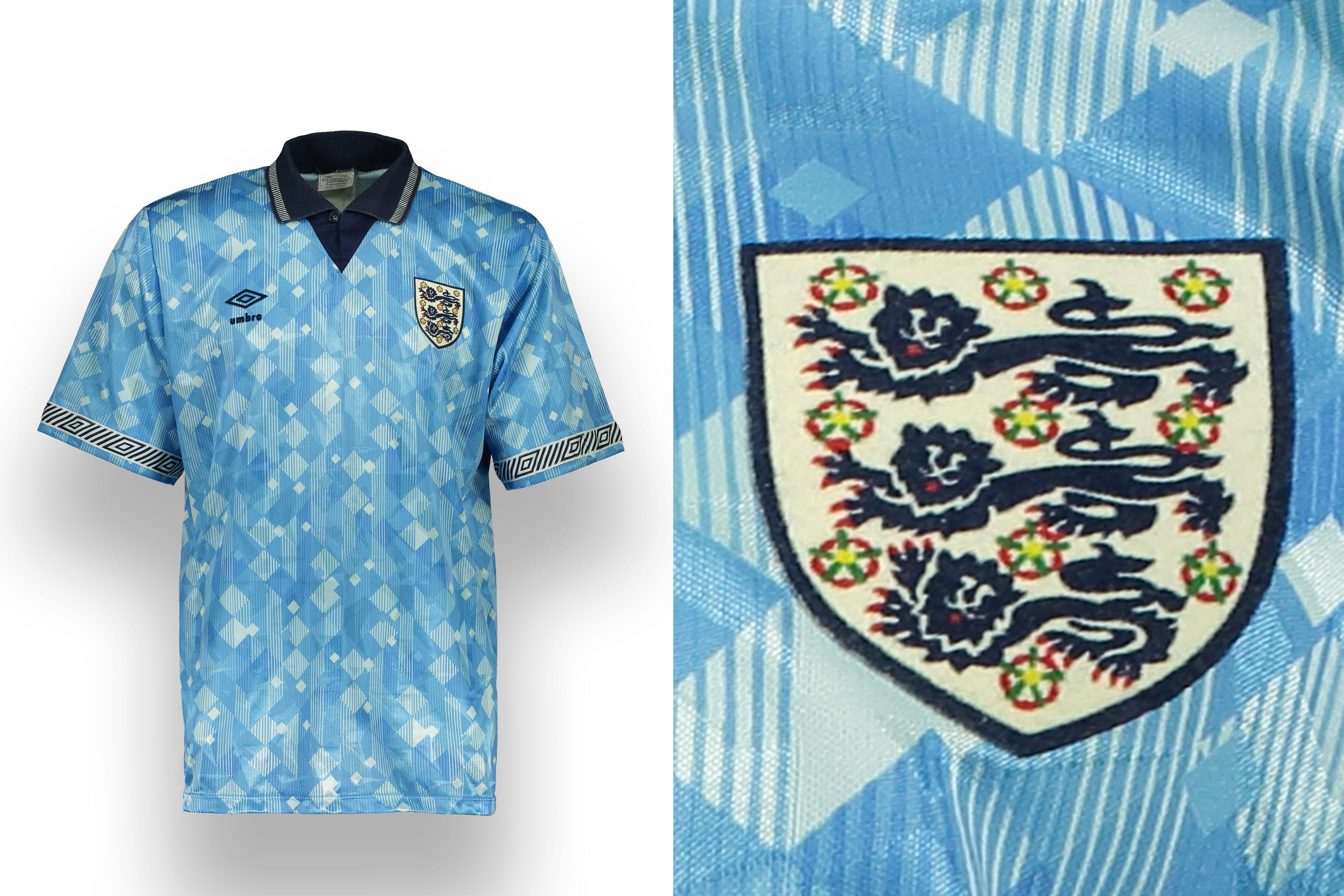
The blue shirt sits at the centre of that shift. It was never worn at Italia 90. England wore it once, in a Euro 92 qualifier in May 1991. Yet it became a lens through which football, music, style and memory were bent into a single image.
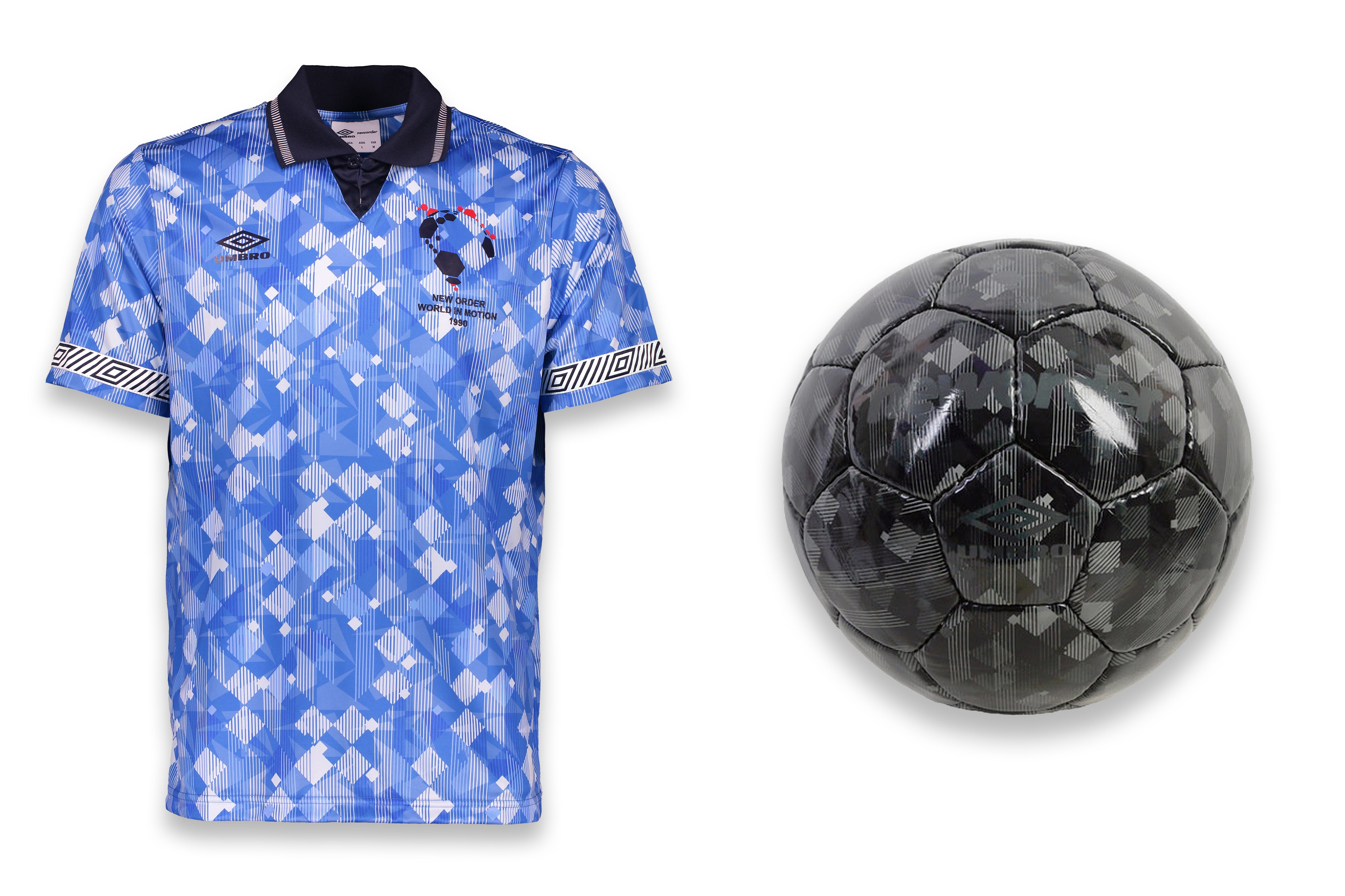
The shirt itself already looked refracted. Pale blue and dark-collared, it was patterned with fractured geometry, diagonal lines and fragments of Umbro’s double diamond. The sleeve tape made it recognisably football, but the surface did something else. It shimmered. It looked less like a traditional England shirt than an image of one passing through glass.
That makes the story of its design feel almost too neat. The Copa Mundial pattern is said to have been inspired by light passing through a cut glass ashtray. An object from an older world of smoke-filled pubs, offices and design studios became the source for a shirt that would later belong to New Order, acid house, Madchester and the visual memory of Italia 90.
Light passed through glass and came out altered. Then England passed through the shirt and came out altered too.
Umbro’s England history also runs through it. By the mid-1980s, the England kit was already moving beyond the pitch. The 1984 home shirt was the first to carry Umbro’s diamond logo on the chest after the company secured the national team contract, while replica shirts were being sold through menswear retailers such as Burton’s. The England shirt was no longer simply match kit. It could enter the high street, the wardrobe, the pub, the club and the everyday life of the fan.
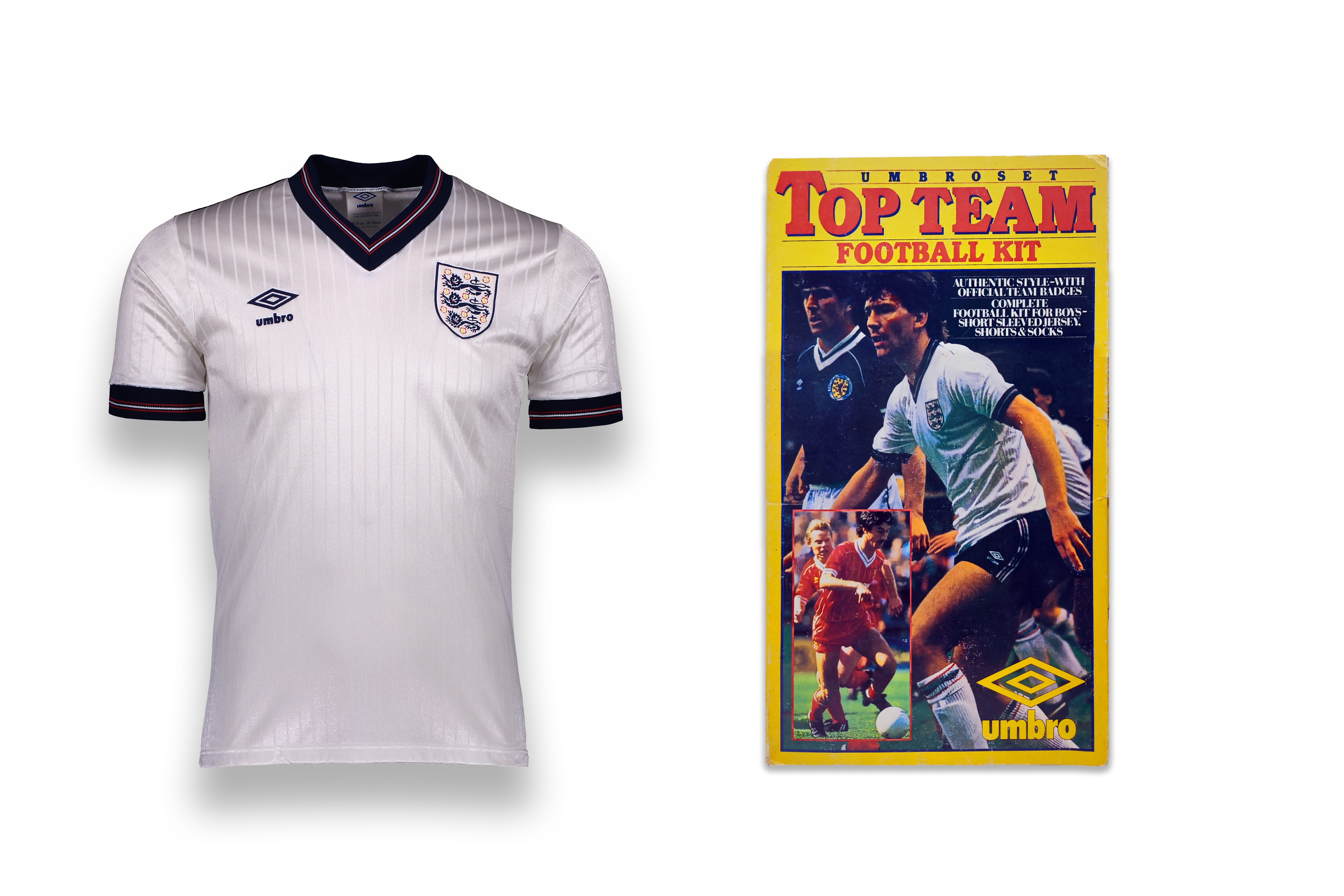
Next to the white England shirt, the yellow Top Team Football Kit packaging makes the shift explicit. England was no longer only a team on television. It was a complete look, boxed, branded and ready to wear.
By Italia 90, football was still carrying the weight of the previous decade, but the tournament gave it a different set of images: music, emotion, style, drama, and a player who looked both brilliant and breakable.
Bernard Sumner in Umbro’s blue England third shirt gave that shift its clearest image. Even the song’s reported working title, E for England, points to the collision taking place: national football, club culture and pop music folding into one another. By the time it became World in Motion, the shirt had already moved somewhere else. It was still England, but seen through Manchester: less official, more indie, less match kit, more cultural signal.
By 1990, ecstasy, rave and Madchester had already begun to loosen some of the harder surfaces of British masculinity. Men expected to perform toughness, tribalism and emotional control were finding other ways to move, gather and feel.
Gazza’s tears landed differently because they arrived inside that shift. A footballer crying into his England shirt was not treated simply as weakness; it became one of the defining images of the tournament.
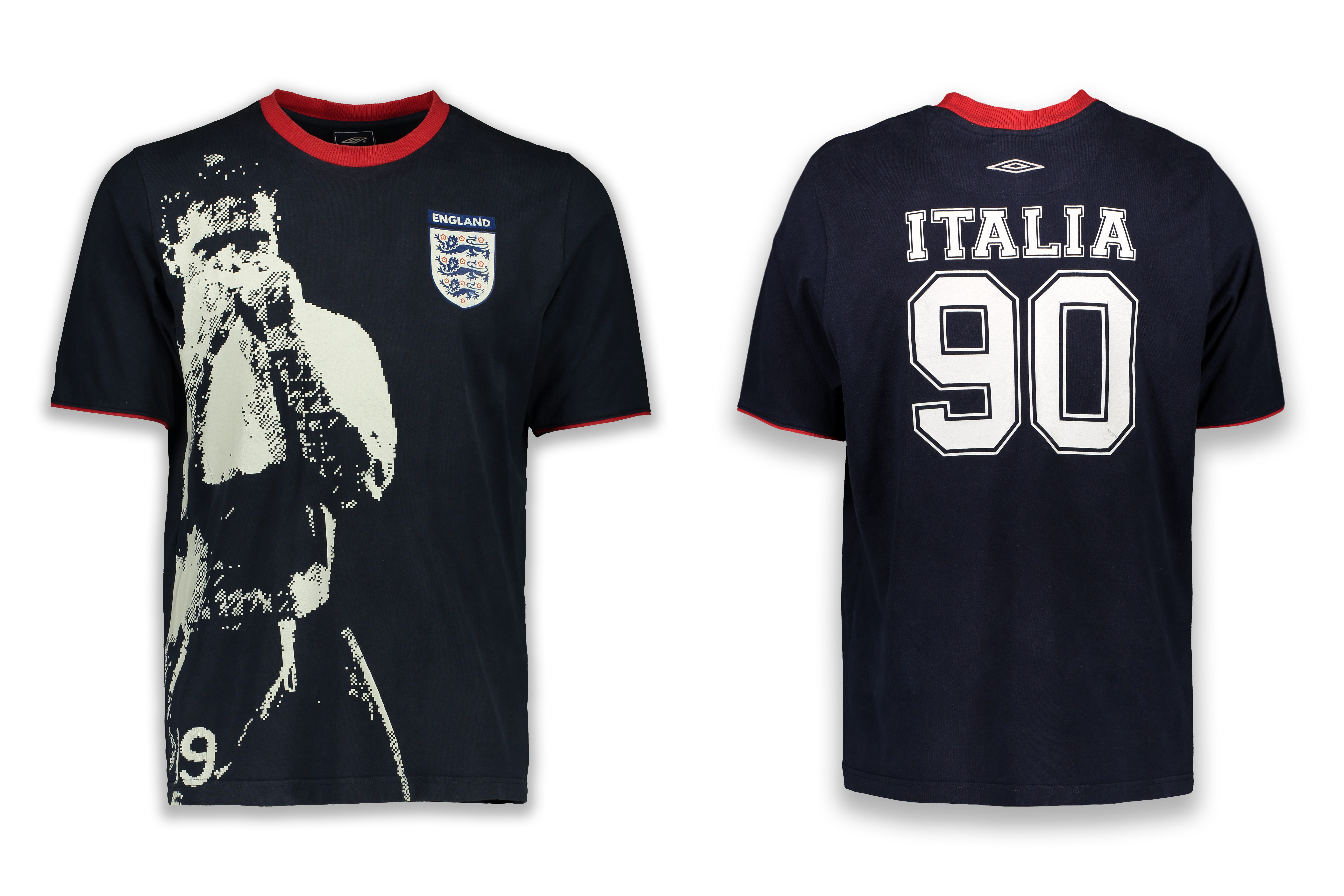
Produced by Umbro more than a decade later, the Gascoigne’s Tears T-shirt sits in the afterlife of Italia 90. The navy shirt has an England crest and a monochrome image of Gascoigne across the front. On the back, ITALIA sits above the number 90, as if the tournament itself had become the player. This is not kit, but it borrows the authority of kit. It is memory printed as sportswear: the emotion of the semi-final refracted into something that can be worn again.
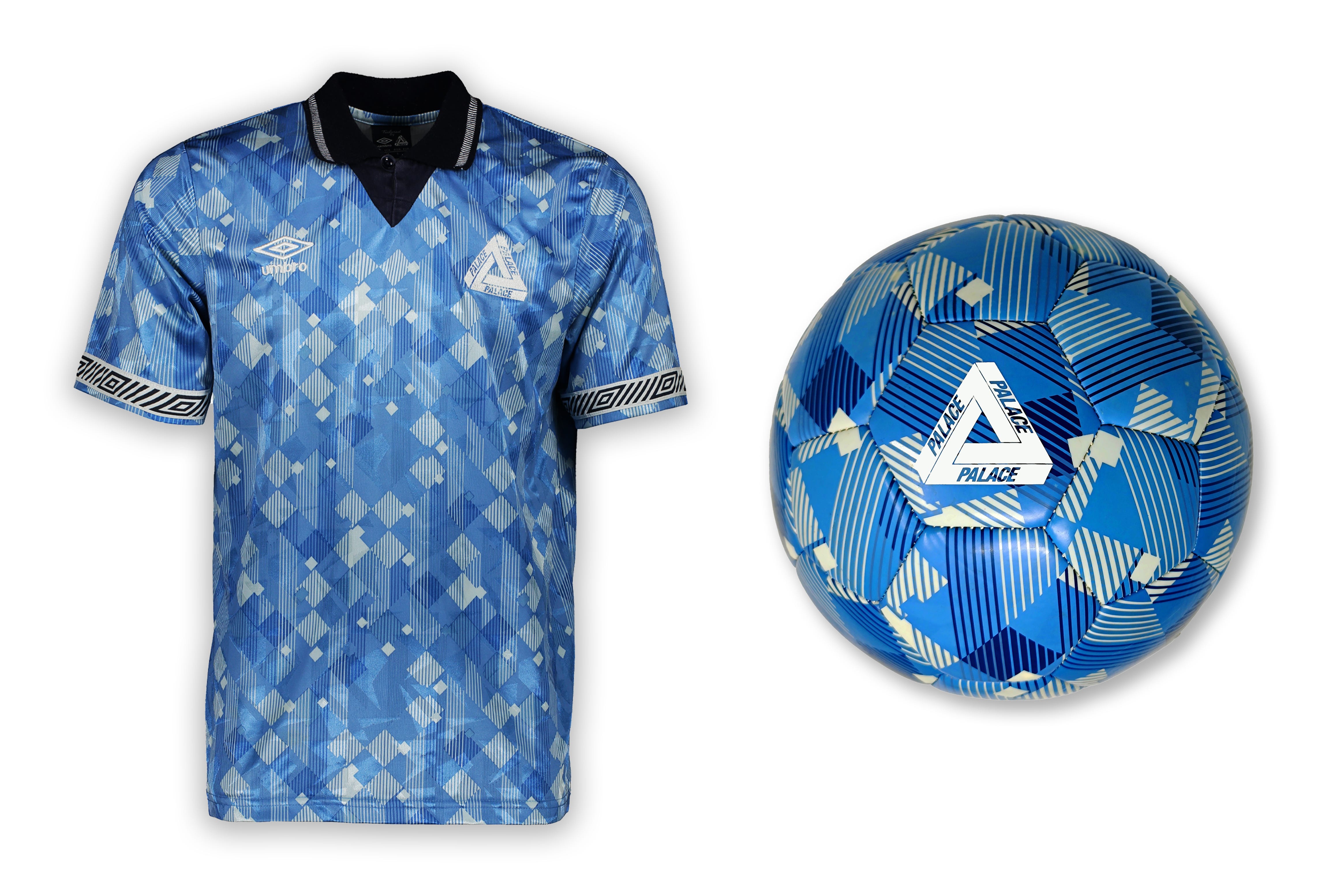
In 2012, Palace collaborated with Umbro on a collection that drew on England’s 1990 third shirt. By then, the shirt was no longer recent memory; it was archival material. The refracted blue pattern, the Umbro diamond and the Italia 90 charge all passed through another lens: London skatewear, streetwear, and a generation who may not have remembered the tournament directly but understood the image.
In 2021, New Order’s version closed the loop. The shirt returned through the band that had helped fix it in public memory in the first place. Football nostalgia was part of the charge, but the shirt carried a larger set of associations: song, summer, semi-final, Manchester, Gazza. Through New Order, the remake reactivated the conditions in which the shirt first mattered.
This is why 1990 refuses to go away. England did not win, but the summer lasted just long enough to give English football a new set of images before handing it another defeat.
The blue shirt survives because it belongs to that summer without being fixed to its decisive moment. It carries the pulse of acid house, the sound of New Order, the vulnerability of Gazza’s tears and the sense of a moment that ended before it could become something else.
People still want to wear it not because it says England won, but because it holds the version of 1990 that never quite happened: the final never reached, the shirt that was never worn, and the feeling that, for once, another England might have been possible.
About the author
Andrew Groves is Professor of Menswear Systems and Director of the Westminster Menswear Archive at the University of Westminster. He writes weekly on menswear, archives, and systems, focusing on how authority and value are produced through clothing. andrewgroves.com
This newsletter examines how menswear operates as a system. Authority, credibility, and value are produced through use, regulation, and appearance.
Subscribe to receive one essay every Thursday.